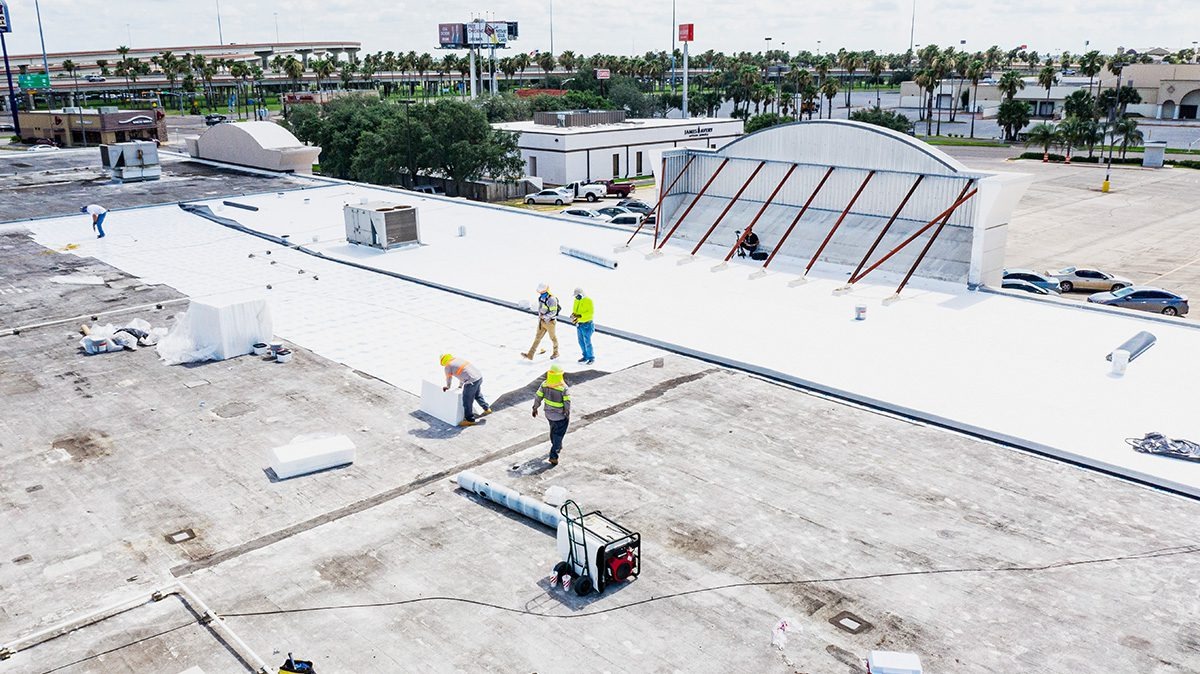
Commercial Roof Inspections in Minneapolis
Every Minneapolis commercial roof we inspect gets a documented condition report with a keyed zone diagram, moisture probe results where saturation is suspected, drain and flashing photographs, and a written recommendation, not a verbal summary.
Most commercial roof inspections in the Twin Cities metro produce one outcome: a contractor tells the building owner the roof needs work, then hands over a proposal. That is not an inspection, that is a lead-generation walk. Our inspections are different in structure and intent.
We document what we find, not what we want to sell. Every inspection produces a written condition report that includes a roof zone diagram keyed to photographs, a moisture assessment (core pulls or probe readings where saturation is suspected), drain and scupper function notes, flashing condition at every parapet and penetration, and a written recommendation that is honest about whether work is needed now, in one to three years, or not at all. That report is useful for capital planning, insurance documentation, property transactions, and warranty compliance whether or not we do any follow-on work.
Minneapolis commercial roofs have specific inspection requirements that southern inspection protocols ignore. Snow load evidence, parapet flashing cracking from ice jacking, drain saddle compression from accumulated weight, membrane wrinkling at drift zones near mechanical screens, appears after every significant snow season. We inspect for these indicators in the spring walk when the evidence is fresh. Fall inspections focus on drain clearing and flashings before freeze-up. The inspection cadence is designed around Minnesota's climate, not a generic annual protocol.
Membrane surface: We walk every accessible square foot of the roof surface. We note blistering, splitting, granule loss on modified bitumen, seam conditions on TPO and EPDM, and alligatoring on BUR and aged asphalt. On roofs where we suspect insulation saturation, indicated by soft spots under foot, staining at interior ceilings, or membrane wrinkling, we pull moisture cores in representative locations across the roof field and at drain sumps. Saturated polyiso insulation under a Minneapolis snow load is not just a thermal performance problem; it is a structural load calculation problem, because wet insulation weighs significantly more than dry insulation.
Drains, scuppers, and overflow relief: Every primary drain, interior drain, scupper, and overflow drain is photographed, measured for debris accumulation, and tested for drain function where feasible. Minneapolis drains fail in two modes: summer debris accumulation from cottonwood seed and storm debris that reduces drainage capacity, and winter ice blockage that converts a slow drain into a retention basin under melt conditions. We note the drain type, size, and any evidence of ponding at the drain sump.
Flashings and penetrations: Parapet base flashings, counterflashings, curb flashings at HVAC units, pipe boots, skylight perimeters, expansion joint covers, and edge metal are all photographed and documented. On North Loop warehouse conversions and older Northeast Minneapolis commercial buildings, we pay particular attention to counterflashing at masonry parapet walls, these transition points are where ice jacking from freeze-thaw cycling concentrates stress.
Rooftop equipment: We note all rooftop HVAC curbs, communication equipment mounts, solar array attachment points, and satellite dish mounts. Equipment that was installed after the original roof was completed, and after the manufacturer warranty was issued, often has flashing details that do not meet current manufacturer specifications. We flag these for warranty review.
Annual maintenance inspection: Typically run twice per year, a spring walk after the snow season (April or May, depending on melt timing at the building's location in the metro) and a fall walk before freeze-up (October). The spring walk documents snow-season damage; the fall walk clears drains and identifies flashings that need sealing before the first hard freeze. Buildings on maintenance contracts with us get inspection reports filed in the asset management record.
Post-storm assessment: The Twin Cities metro gets significant hail events in late spring and summer, the May through September window typically produces one to three insurable hail events per year across the metro. We run post-storm walks within 48 to 72 hours of events that generate Hennepin County or Ramsey County hail reports and photograph all impact evidence to insurance-grade documentation standards. We distinguish clearly between new storm damage and pre-existing wear, our reports are written to be defensible to an insurance adjuster.
Pre-acquisition due diligence: Buyers of commercial property in Minneapolis need an independent roof condition assessment before closing, the Capella Tower corridor, the North Loop warehouse-to-office conversion market, and the Bloomington hospitality and medical inventory all see active acquisition activity. We produce a pre-acquisition report that includes remaining service life estimate, capital reserve requirement for the next replacement cycle, and any immediate repair scope, without any relationship to either buyer or seller.
Warranty compliance walk: Most manufacturer flat roof warranties require an annual inspection by a qualified contractor to maintain warranty status. We run these inspections and file the compliance documentation with the manufacturer's warranty desk. Buildings that have lapsed on the annual inspection requirement often find their warranty has been voided by the time they need it, typically after an ice dam event or a drain backup.
Minneapolis-Specific Inspection Timing
Spring is the most important inspection window for Twin Cities commercial roofs. After the February through March snow-load season, when roofs in the Downtown Minneapolis core, the Uptown corridor, and the University of Minnesota campus area are carrying sequential snow events, the spring melt exposes damage that was hidden under snow cover. Ice jacking at parapet flashings, membrane splitting at drift zones near mechanical screens, and drain blockage from freeze-thaw debris all show up in the April and May walk that they do not show up in a midwinter inspection.
Fall is the critical maintenance window. We clear drains, seal any open flashings, and document the pre-winter condition before freeze-up locks the roof surface until spring. Buildings along the Highway . Louis Park, the Brooklyn Park and Maple Grove industrial corridors, and the Eden Prairie corporate campus area all benefit from a documented October inspection that confirms drain capacity before the snow season.
How much does a commercial roof inspection cost in Minneapolis?
Inspection pricing depends on roof area, number of penetrations, and whether moisture core pulls are included. We price inspections as a fixed scope, not an hourly estimate, so the building owner knows the cost before we walk the roof. Inspections for buildings on our annual maintenance contracts are included in the contract. Standalone inspection reports for pre-acquisition due diligence and post-storm assessments are priced separately.
Do you provide a written report after every inspection?
Yes. Every inspection produces a written condition report with a keyed zone diagram, photographs at every noted condition, a moisture assessment where applicable, and a written recommendation. Reports are delivered within five business days of the inspection walk. For post-storm insurance documentation, we can expedite delivery to 48 hours when needed.
Can your inspection report be used for a warranty claim?
Our inspection reports are written to documentation standards that manufacturer warranty desks and insurance adjusters work from. We identify scope clearly, distinguishing storm damage from pre-existing wear, and installation defects from maintenance failures, and photograph all conditions against a zone diagram that lets the reviewer understand the spatial context. We do not represent insureds or manufacturers; we provide documented facts.
Schedule a documented roof inspection for your Minneapolis building.
Our project managers will walk the roof, pull moisture cores where saturation is suspected, photograph every noted condition, and deliver a written report you can use for capital planning, warranty compliance, or insurance documentation.