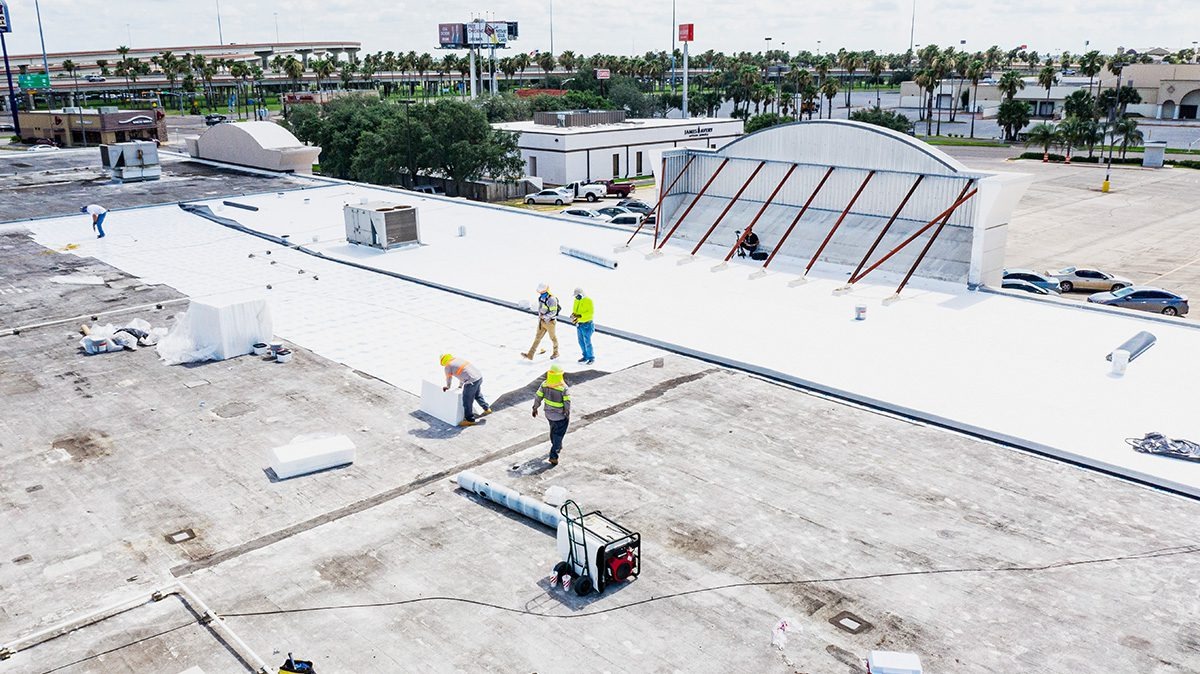
Owner's Representative Roofing Services, Commercial Roofers of Minneapolis
What Owner's Rep Covers on a Minneapolis Commercial Project
Pre-construction submittal review: We review the contractor's submitted scope, manufacturer product submittals, and proposed material samples against the contract documents before installation begins. On Minneapolis commercial projects, the pre-construction review is where we most often find scope drift, the submitted membrane is a different product line than specified, the proposed insulation substitution does not meet the R-30 minimum for Climate Zone 6, or the proposed flashing detail does not follow the manufacturer's published detail library for a Minnesota snow-load condition. These get resolved in writing before crew mobilization.
During-construction field observation: We conduct field visits at the milestones where deviations most commonly occur and are hardest to correct after the fact, insulation installation before membrane cover, membrane installation during active progress, parapet and penetration flashing completion, and drain ring installation. On Minneapolis projects, we add a specific observation visit at the first completed parapet flashing section, because the wall-transition detail under Minnesota freeze-thaw conditions is the most common warranty-jeopardizing finding at manufacturer inspections on Twin Cities commercial buildings.
Closeout participation: We participate in the punch walk, verify that contractor-identified punch items match our field observation notes, confirm the manufacturer inspection is scheduled with the correct credentialed inspector, and review the complete closeout package, warranty document, photo-keyed zone diagram, snow load documentation, maintenance contract, before the owner accepts substantial completion. Payment recommendation goes to the owner after we confirm the closeout package is complete.
The Deviations We Find Most Often on Minneapolis Projects
Parapet flashing termination height: Minnesota State Building Code and manufacturer warranty requirements call for membrane to turn up the parapet face to a minimum height above the design snow depth for that building's location. On Twin Cities commercial buildings with significant parapet exposure, the termination height that satisfies the code minimums on paper often does not satisfy the manufacturer's warranty inspection criteria for ice dam conditions. We verify as-built termination heights against both the code minimum and the manufacturer's Minnesota-specific installation guidance.
Insulation fastener pattern under mechanically attached membrane: The fastener density through the insulation layer must accommodate both the wind-uplift design requirement and the cold-weather substrate conditions during installation. Crews under schedule pressure in a short construction season sometimes compress the pattern in the field zones. We verify fastener counts per square foot against the approved design at the beginning of membrane installation, not at the punch walk.
Cold-weather adhesive protocols: On projects running into October or November in the Twin Cities, fully adhered membrane work requires manufacturer-specified cold-weather adhesive formulations and minimum substrate temperature verification before application. We spot-check substrate temperature documentation and adhesive product against the manufacturer's cold-weather installation requirements when ambient temperatures are below 40°F.
When Owner's Rep Is Worth the Engagement Cost
Projects above $250,000 installed value on Minneapolis commercial buildings generally have enough warranty exposure and capital risk to justify owner's rep engagement. The alternative risk, a warranty-voiding installation deficiency on a 75,000 sq ft replacement, means the owner carries an unwarranted roof for 20 years on a building in one of the harshest commercial roofing climates in the country.
Minneapolis buildings with sensitive operations, hospital-adjacent medical office buildings near the U of M Medical Center or Abbott Northwestern, data centers in the North Loop, occupied high-rise office in the downtown Skyway core, have additional urgency. A construction deficiency that generates a leak during occupied clinical hours or a data center event creates liability exposure that dwarfs the project cost. Owner's rep observation on these buildings is not optional for a responsible owner.
First-time Minneapolis owners, buyers of acquired properties who are running their first Minnesota commercial roofing project and do not yet have local contractor relationships or experience with Minnesota-specific code requirements, consistently find owner's rep engagement valuable in their first cycle here.
How many site visits does owner's rep typically involve on a Minneapolis project?
For a standard Minneapolis commercial replacement, 40,000 to 80,000 sq ft, three to four weeks of production in summer, typically four to six field observation visits plus pre-construction submittal review and punch walk participation. Projects with phased production, occupied buildings with sensitive tenants, deck replacement sections, or cold-weather installation windows add visits at the decision points where risk is highest.
Can you do owner's rep on a project where you also wrote the RFP?
Yes. Writing the RFP and acting as owner's rep during construction are both owner-side advisory roles. We are not competing with the installing contractor in either case. Continuity from RFP through construction actually reduces scope-drift risk because the person who wrote the specification is the same person verifying compliance against it in the field.
What is your authority during construction? Can you stop work?
Our authority is advisory. We identify deficiencies, document them in writing, and recommend specific corrective actions to the owner. We do not issue stop-work orders to the contractor, that authority rests with the owner's designated representative. In practice, a written field deficiency notice from an independent technical observer on a significant installation deviation is sufficient to get contractor attention and corrective action on most Minneapolis projects.
Do you coordinate with the manufacturer's field representative during construction?
Yes. On Minneapolis projects with active manufacturer warranty paths, we coordinate with the manufacturer's regional field rep to confirm the installation is tracking toward warranty eligibility. Most manufacturers will conduct a mid-project field visit on large Twin Cities projects if requested, this is worth arranging on projects above $400,000 where the warranty closeout represents significant financial stake for the owner.
Need a technical owner's rep on a Minneapolis roofing project?
We will review submittals, observe the installation at the milestones where Minnesota-climate deviations most commonly occur, and confirm the closeout package supports the manufacturer warranty your building is paying for.