Agricultural & Food Industry Roofing Minneapolis
The Twin Cities is one of the most important agribusiness and food-processing centers in North America, Cargill in Wayzata, General Mills in Golden Valley, Hormel's regional operations, and dozens of ingredient, flavoring, and packaging companies across the metro. Food-adjacent facilities have roofing requirements that most contractors have never encountered: debris containment, material selection for low chemical off-gassing, and daily cleanup protocols that satisfy a food-safety audit.
Cargill, Incorporated has its world headquarters in Wayzata, Minnesota, on the western shore of Lake Minnetonka, the largest privately held company in the United States, with a global agribusiness operation defined by its Twin Cities headquarters and research facilities. Cargill's Wayzata campus and its processing and distribution facilities across the metro are maintained under a facilities management program that requires contractor qualification, food-safety-adjacent protocols for facility work, and closeout documentation compatible with Cargill's internal asset management system.
General Mills, headquartered in Golden Valley on the west side of the metro near the I- 169 intersection, operates research and development facilities, a corporate headquarters campus, and several manufacturing and warehousing buildings in the Twin Cities area. General Mills' R&D and ingredient testing facilities in Golden Valley have clean-room-adjacent spaces and food-safety requirements that extend to every contractor working on or near the buildings. Roofing scope on General Mills buildings includes a pre-project materials review with the company's environmental health and safety team.
Hormel Foods operates regional distribution and processing facilities across the upper Midwest, with several locations in the Twin Cities metro serving as distribution nodes for Hormel's branded product lines. Hormel's food-safety vendor requirements align with GFSI (Global Food Safety Initiative) standards for contractors working in or adjacent to food-production environments, this includes the debris containment, magnetic fastener sweeping, and documentation protocols that distinguish food-adjacent from standard commercial roofing work.
Food-Safety Protocols for Roofing Projects
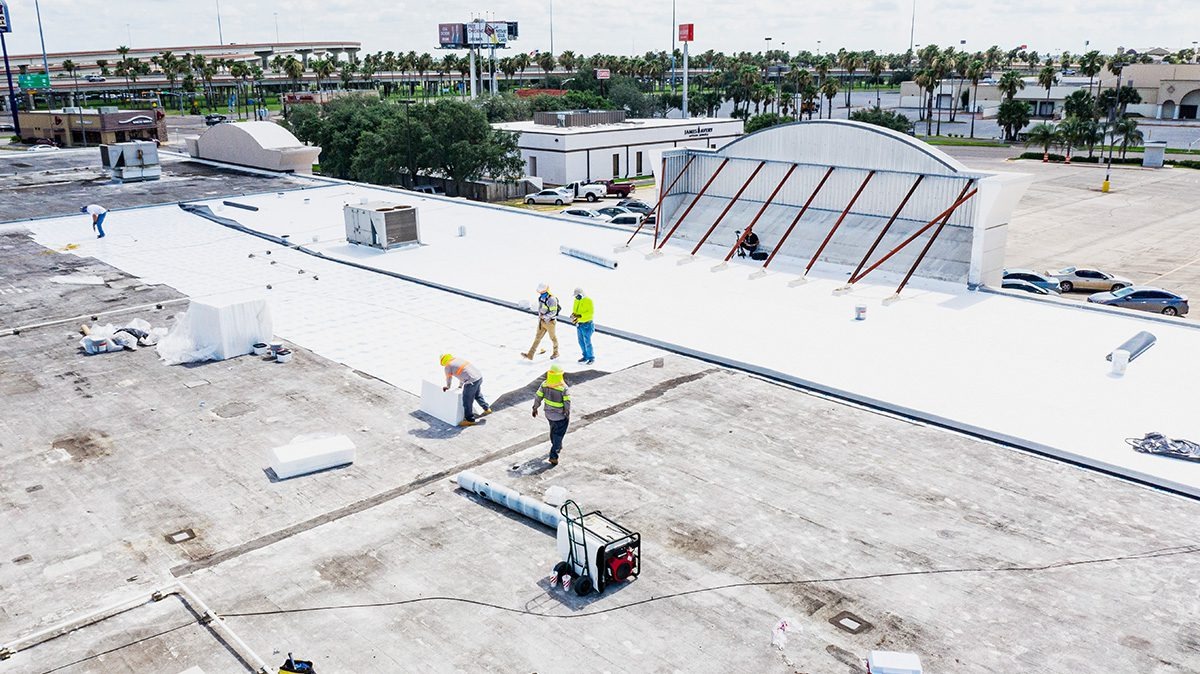
Roofing work above or adjacent to food production, ingredient storage, or finished-product areas requires a debris-containment plan that addresses every potential pathway from the roof surface to the food environment below. Roofing gravel, fasteners (typically 1.5-inch to 4-inch steel screws on commercial flat roofs), membrane granules, and adhesive particulate can all contaminate food products if they enter the building through HVAC intakes, open skylights, or dock doors left open during production. We implement magnetic sweeping of the full project area at the end of each work day and document the sweep in a daily cleanup log provided to the client's food safety coordinator.
Material selection for food-adjacent facilities prioritizes low-VOC adhesives and primers that do not produce odors or chemical off-gassing that could be drawn into the building's HVAC and contaminate product. We review the SDS (Safety Data Sheet) for every adhesive, primer, and sealant with the client's EHS team before finalizing the specification. Torch-applied modified bitumen is generally avoided on food production facility roofs where the torch-fume profile is a food-safety concern, mechanically attached or fully-adhered single-ply systems are the standard specification for these buildings.
HVAC intake protection is a non-negotiable requirement on food-adjacent roofing projects. We install intake screens and filters at every HVAC intake within the production area of the project before any tear-off or membrane work begins. Intakes are inspected daily and cleaned before operations start each morning. At project completion, intake filters are replaced and documented in the closeout package.
Cargill and General Mills Facilities Management Requirements
Cargill's vendor qualification process for facility contractors is similar in structure to what a large healthcare or financial institution requires, insurance at appropriate limits, safety program documentation, and familiarity with the company's contractor safety manual before a project is approved. Cargill's Wayzata headquarters and its Minnetonka-area research facilities have specific access-control and security requirements for contractor personnel. We initiate the vendor qualification process at the front end of pre-construction and do not assume we can mobilize without completing it.
General Mills' Golden Valley campus has a mix of building ages, from mid-century R&D buildings to recent construction, and a range of roof system vintages that reflect those different construction periods. Many of the older R&D buildings are on original or early-replacement modified bitumen systems that are past their design life. The recover-vs-replace decision on these buildings requires moisture-core assessment, deck inspection at suspected wet areas, and a structural review of the additional load from a recover layer on the older buildings.
Both Cargill and General Mills operate on annual capital planning cycles that require roofing contractors to provide multi-year capital forecasts alongside single-project scopes. We provide condition assessment reports that include a 5-year capital forecast for each building inspected, the facilities management team uses this data to build the annual capital budget and the 5-year capital improvement plan that both companies maintain.
Grain Elevator and Agricultural Storage Facility Considerations
The Twin Cities metro and the surrounding agricultural region include grain elevators, agricultural storage facilities, and ingredient warehouses that present specific roofing challenges. Grain dust is an explosive hazard, OSHA NFPA 654 and 61 govern the hot-work requirements for facilities that handle combustible grain dust. Torch-applied roofing is prohibited in areas where grain dust concentration creates an explosion risk, and even cold-work adhesives with flammable solvents require specific handling procedures. We review the facility's grain dust hazard classification before specifying any adhesive system for grain storage facilities.
Large-bin storage buildings and flat-floor grain warehouses in the Twin Cities metro have roofing systems that must handle the same Minnesota snow loads (35 to 40 psf) as any other commercial building, but with the additional consideration that grain storage buildings are often only partially occupied, or seasonally vacant, during production. Partially occupied agricultural buildings in Minnesota have condensation management challenges in the winter months that occupied buildings do not, and the insulation and vapor barrier specification must account for the seasonal occupancy pattern.
How do you satisfy a food safety audit for roofing contractor work?
We implement a documented food-safety protocol that includes: daily magnetic fastener sweeps with a log provided to the food safety coordinator, HVAC intake protection installed before tear-off begins, low-VOC adhesive and primer selection reviewed with EHS before specification finalization, and a daily cleanup inspection with photographic documentation. This protocol is designed to satisfy the documentation requirements of a GFSI-aligned food safety audit.
Do you have experience with the Cargill or General Mills vendor qualification process?
We understand the qualification documentation, insurance requirements, and safety program standards that large agribusiness and food-industry employers require. We initiate the vendor qualification process at the pre-construction phase and do not assume we can proceed without completing it. Call 612-712-4052 to begin the pre-qualification conversation for Cargill, General Mills, or Hormel facility work.
Can torch-applied modified bitumen be used on a grain storage facility?
Generally no. OSHA NFPA 654 and 61 govern hot-work requirements in facilities where combustible grain dust creates an explosion risk. We review the facility's hazard classification and the specific building's grain dust exposure before specifying any adhesive system. For grain storage facilities where hot-work is restricted, we specify mechanically attached or cold-applied fully-adhered single-ply systems that achieve equivalent waterproofing performance without open flame.