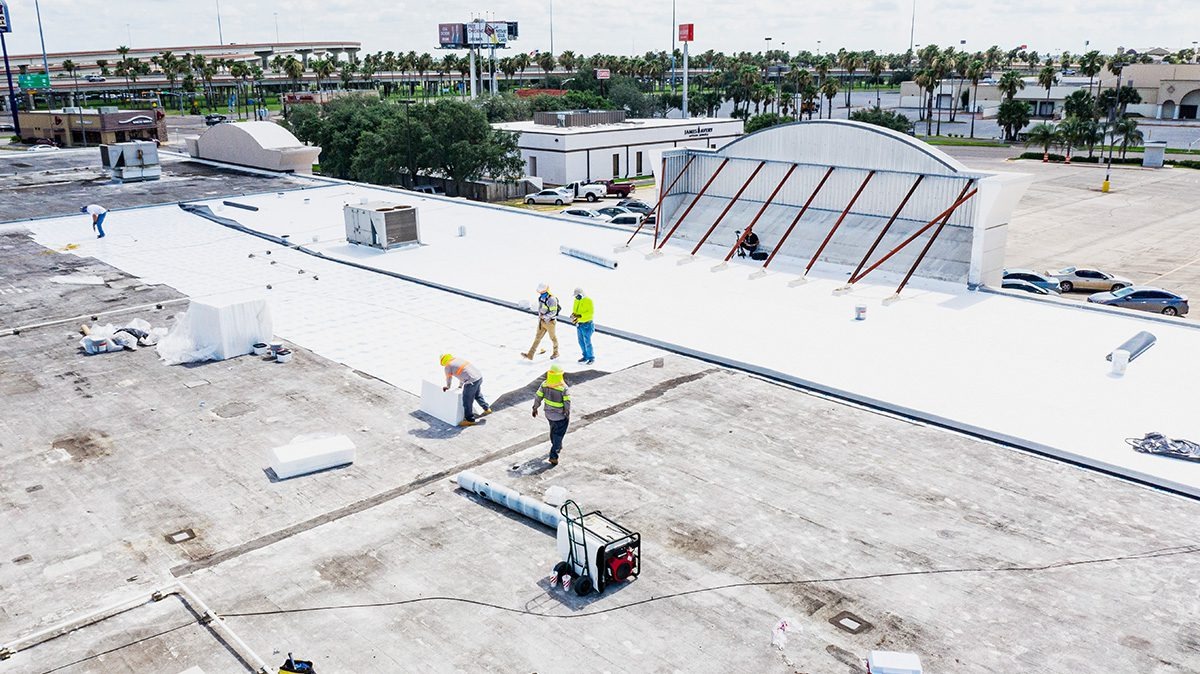
Fitness Center & Gym Roofing in Minneapolis, MN
Roofing Built for the Loads a Gym Puts on It
A fitness center asks more of its roof than its square footage suggests. A wide-open training floor with no interior columns means a long-span deck overhead. Two hundred members working out at once means high-volume air handling to keep the air breathable, which means a roof crowded with large packaged units and exhaust fans. Add a lap pool, a steam room, or a hot-yoga studio and you have introduced a humidity problem that pushes moisture up into the roof assembly from below. None of that is captured by treating the building like a big-box retail box.
Minneapolis carries a dense field of these facilities. Life Time was founded in the metro and still runs flagship clubs here; the city's own park-and-rec system operates recreation centers across every neighborhood; and national operators along with independent CrossFit boxes and boutique studios fill storefronts from Uptown to the suburban rings around the 494 corridor. Cold winters keep this region indoors for months, which is exactly why the demand for indoor fitness space, and roofs that hold up over it, runs so high.
Matching the System to the Building
The membrane choice follows the building, not a default. A dry box gym or a converted retail bay does well with mechanically attached TPO over polyiso. A full-service club with a pool leans toward a fully adhered membrane that reduces the number of fasteners pushing through the assembly in a high-humidity environment. An older masonry health club with a sound but tired roof may be a strong candidate for a fluid-applied restoration that avoids tearing off over occupied locker rooms and a running pool. We core and survey first, then specify, because the wrong system over a wet environment fails quietly and early, and the right one disappears into the background for decades.
The Humidity Problem Most Owners Miss
If the building has a pool, a spa, or wet locker rooms, vapor drive is the controlling design issue. Warm, moisture-laden interior air wants to move up and out through the roof, and when it hits the cold underside of the deck in a Minnesota January, it condenses inside the assembly. A membrane installed perfectly at the top does nothing to stop this. The fix is a correctly positioned vapor retarder and an insulation strategy matched to this climate zone, so moisture can't accumulate and quietly destroy the insulation's R-value one season at a time.
We review the existing assembly before we specify anything over a natatorium or wet area. Where the vapor retarder is missing or in the wrong plane, we correct it as part of the scope rather than papering over it with new membrane.
Open gym floors and gymnasiums sit under long-span steel deck, and the fastening pattern has to respect the deck's rib depth and gauge, older short-rib deck holds far less than modern three-inch deck. We confirm deck type before choosing mechanical attachment, and on the widest spans we'll look at adhered or hybrid systems to avoid concentrating point loads at the seams.
Equipment density is the other reality. Count the curbs on a full-service health club and you'll find two to three times the penetrations of a retail building the same size, supply and exhaust for the main floor, dedicated units for group-exercise and spin rooms, locker-room ventilation, and pool dehumidification. Every one of those curbs gets individually flashed, and undersized curbs (a recurring defect on older clubs) get raised to meet the manufacturer's warranty height. White TPO or PVC handles this work well and meets the cool-roof expectations now common on Minneapolis reroof permits.
Roofing a Club That Never Really Closes
Gyms run from before dawn to late at night, often seven days a week, and many are 24-hour operations. That shapes the whole project. We set the work schedule with the club's management before mobilizing, concentrate the loudest tear-off away from peak class times and early-morning rushes, and confirm watertight dry-in in writing at the end of each day so the next morning's members never know a roof was open. Where pool dehumidification has to be interrupted for curb work, we coordinate that window with the facilities team so indoor air quality and any state health-department requirements for the pool stay in compliance.
Snow Load Over a Column-Free Floor
The same wide spans that make a gym floor usable make its roof a serious snow-load consideration in Minneapolis. A gymnasium or open weight floor with no interior columns carries the full drifting load across the deck, and the heavy rooftop units a fitness center needs create wind shadows where snow piles deeper than the surrounding field. We account for that in both the structural conversation and the drainage design, tapered insulation and crickets that route meltwater around the equipment to the drains rather than letting it pool and refreeze against a curb. On a building where the roof is also holding up several tons of air handling, the interaction between equipment loads and snow loads is part of the design, not an afterthought.
Member Experience During the Project
A reroof shouldn't cost a club its members. We protect the experience on the floor by isolating the noise and odor of tear-off and hot work from occupied training areas, staging materials so the entrance and parking stay clear, and keeping the locker rooms and pool dry throughout. Where a section of roof sits directly over a studio or the pool, we phase the work so that space can stay open or close on the club's terms rather than the crew's. Clear daily communication with the front desk means staff can answer member questions instead of being surprised by them.
Documentation for Chains and Independents Alike
National and regional operators run vendor-approval and corporate facilities processes; we work inside them. Independent club owners and the investors who hold these buildings get the same closeout package either way, permit and final inspection, manufacturer warranty registration, a roof-zone diagram with the full penetration inventory, and drain and flashing records for the asset file. A health club's roof is a capital asset that, maintained correctly, should outlast several rounds of equipment on the floor below it.
- Stadium Arena Roofing
- Veterinary Clinic Roofing
- Multifamily Roofing
- Data Center Roofing
- Car Wash Facility Roofing
- Silicone Roof Coating
- Restaurant Roofing
- Emergency Roof Repair