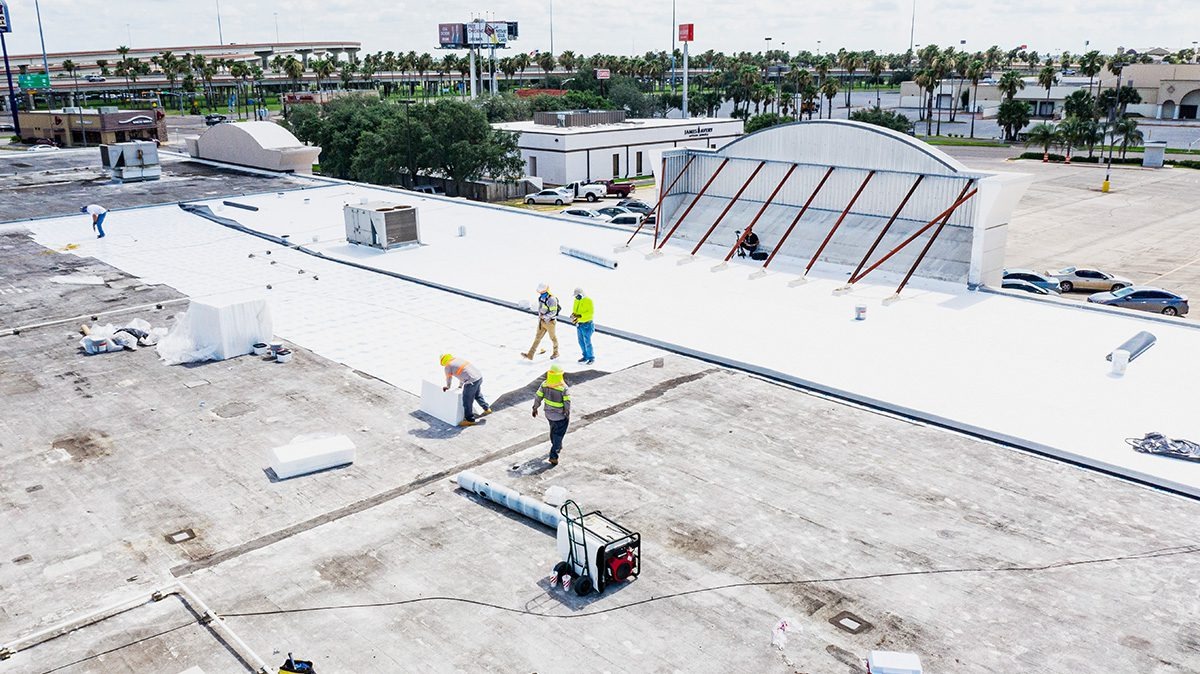
Industrial Flex Space Roofing in Minneapolis, MN
Roofing for Multi-Tenant Flex Buildings in Minneapolis
A flex building is never really one building. The shell that reads as a single low-slope roof from the street is usually carved into bays leased to a fabricator, a distributor, a trades contractor, and a back-office tenant who only needs a loading door and three parking spots. We roof these properties the way they actually operate: as a shared deck sitting over several businesses with different hours, different rooftop equipment, and different tolerance for disruption. Get that wrong and you create leaks over one tenant while another is still under warranty next door.
Minneapolis has a deep inventory of this product. The flex parks off Highway . Louis Park and Golden Valley, the older tilt-up corridors along Hiawatha and University Avenue, and the newer business parks pushing out toward the I-494 and I-694 beltways all hold buildings that started life as one thing and now house another. A 1980s warehouse bay that once held pallet racking may now be a brewery taproom, a climbing gym, or a contract machine shop. Each conversion punches new holes in the roof.
Why Penetrations Define the Job
The defining roofing fact of a flex building is penetration density. Every tenant improvement adds something on top: a packaged rooftop unit for a new office buildout, an exhaust fan over a paint booth, a condenser for a server closet, gas lines, conduit, a grease duct for a kitchen tenant. Over fifteen or twenty years of turnover, the roof accumulates dozens of penetrations, many of them undocumented and a fair number abandoned in place when a tenant left and their equipment was pulled.
Before we price any reroof or recover on a Minneapolis flex property, we walk the roof and build a penetration inventory, photographed, located, and matched against the original drawings when the owner has them. Abandoned curbs get identified for infill. Live equipment gets noted with its tenant and service contractor. This survey is the part of the job that protects the owner from finding out, mid-project, that a sealed-over curb was still tied to an occupied bay.
Membrane and Recover Decisions
The right assembly depends on what is already up there. Tilt-up and block flex buildings on steel deck are well suited to 60-mil TPO mechanically attached over tapered polyiso, which corrects the ponding that collects against parapets and at interior drains as the original insulation compresses. Where the existing roof is sound but weathered and the owner wants to extend service life rather than tear off, a fluid-applied or recover approach keeps the bays dry and the dumpsters off the site. Pre-engineered metal flex buildings, common in the outer business parks, are candidates for a coated-metal restoration or a retrofit membrane over the standing seam, evaluated against panel condition and the pull-out values the deck can actually hold.
We core the roof to confirm how many layers are in place and whether moisture has already entered the insulation. Minnesota code limits the number of roof layers, and a wet substrate has to come off regardless of how the membrane looks. Those two findings usually decide recover versus full replacement before cost ever enters the conversation.
Scheduling is the other half of flex work. We start from a bay-by-bay occupancy map and a property-management contact list, not from guesswork. Active rooftop equipment, vacant bays, and tenants sensitive to noise or a temporary HVAC shutdown all get flagged before the crew mobilizes. Communication runs through the property manager so a brewery's Saturday crowd or a machine shop's production run isn't interrupted by a tear-off they never heard about. Each work area is dried in before the crew leaves for the day.
Vacancy is its own risk on these buildings. When a tenant clears out and their units come off, the open curbs are often capped with whatever was handy, and that protection rarely survives the next Minnesota storm. Lease-transition roof checks, confirming curb caps, sealing former-tenant penetrations, and clearing drains in bays that have sat empty and collected debris, keep a turning property from leaking into its next lease.
Snow, Drainage, and the Minnesota Winter
A flat roof in this climate is a snow-storage surface for four or five months a year, and flex buildings make that harder than most. Long, low-slope spans collect drifting snow against parapets and equipment screens, and the freeze-thaw swings of a Minneapolis late winter drive meltwater into any seam or flashing that isn't tight. Interior roof drains on these buildings frequently sit downstream of decades of compressed insulation, so water that should leave the roof instead ponds and refreezes. We design drainage to actually move water off the deck, tapered insulation to the drains, secondary overflow scuppers where the parapet conditions call for them, and crickets behind wide rooftop units that would otherwise dam meltwater. The structural reality of accumulated snow load also factors into how we add or relocate equipment, because a bay conversion that piles new units onto an already loaded roof is a structural question before it is a roofing one.
Roof Access and Daily Operations
Flex tenants run forklifts, take deliveries at dock doors, and keep customer parking turning over, so staging a roofing project means keeping the ground floor working while the crew works overhead. We plan crane and material-hoist locations to avoid blocking dock doors and drive aisles, schedule loud demolition away from a taproom's service hours or an office tenant's client meetings, and keep debris contained so a machine shop's open bay door doesn't take on roofing tear-off. None of that is unusual on a multi-tenant building, it just has to be planned bay by bay rather than treated as a single empty rooftop.
Built for Owners and Property Managers
Most flex buildings here are held by investors and managed portfolios rather than the businesses inside them. We price per roof square after a walk and core, deliver a standardized condition report that drops into a capital plan, and keep the documentation consistent across a portfolio so an owner with several flex properties can compare them on the same terms. Closeout includes the manufacturer warranty registered to the owner, a roof-zone diagram with the full penetration inventory, and the drain and flashing records that make the next inspection faster. The goal is a roof that performs through occupancy changes without a surprise assessment every time a bay turns over.
- Event Venue Roofing
- Museum Cultural Facility Roofing
- School Roofing
- Senior Living Facility Roofing
- Food Processing Facility Roofing
- Roof Replacement Planning
- University Campus Roofing
- Commercial Roof Maintenance