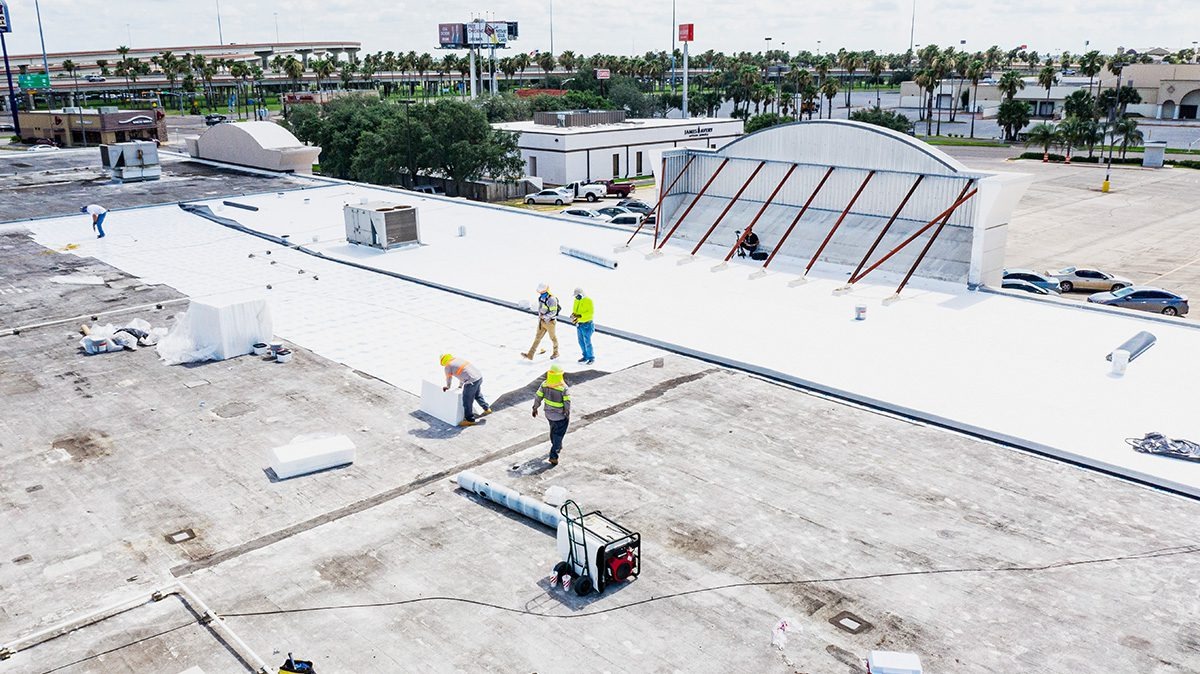
Auto Dealership Roofing in Minneapolis, MN
Commercial roofing for auto dealerships, car lots, service centers, and automotive facilities throughout Minneapolis, MN.
Walser Automotive Group operates a growing network of dealerships across the Twin Cities metro, including its Honda, Toyota, Mazda, and Hyundai locations in Brooklyn Park, Burnsville, and Bloomington, and those properties face the most demanding auto dealership roofing environment in the continental United States. Minneapolis's combination of 50 psf ground snow loads, 55 to 70 freeze-thaw cycles per year, minus 20 degree winter lows, and summer hailstorms that exceed two inches creates a roofing challenge that is simply harder than any market in the lower 48.
Snow load engineering is the foundational parameter for every structural and roofing decision at a Walser dealership. Hennepin County's 50 psf ground snow load translates to roof design loads that, when combined with drift calculations at connected building transitions, can produce localized design loads exceeding 80 psf at the service-bay-to-showroom connection that is standard in modern dealership design. Before any re-roofing project on a Twin Cities dealership campus, a licensed structural engineer should assess the existing roof structure's capacity for the proposed new insulation assembly and any changes to drainage patterns that could affect snow accumulation distribution.
Cold-temperature material performance defines the specification requirements for Minneapolis dealership roofing. At minus 20 degrees Fahrenheit, membrane adhesives must be low-temperature formulations rated for application at these extremes; standard adhesives become ineffective or fail entirely. EPDM membranes remain flexible at these temperatures but require special handling to avoid cold-crack failure during installation. TPO is competitive in cold climates with appropriate adhesive formulations, but the installer's experience with extreme cold installation is as important as the product specification. A poorly installed cold-weather application fails within the first season regardless of product quality.
Showroom skylights at Walser dealerships represent the single most maintenance-intensive roofing element in the Minneapolis climate. Heavy snow accumulates on and around skylight curbs, freeze-thaw cycling stresses curb-to-frame seals at 55 to 70 cycles per year, and the heat loss from the showroom floor creates ice dam conditions at skylight perimeters. Skylights at Twin Cities dealerships should be specified with thermally broken curb frames that minimize heat transfer at the skylight-to-roof transition, a standard detail in institutional construction that is often omitted from commercial dealership specifications. Post-winter April inspection and proactive seal replacement are non-negotiable maintenance requirements.
Ice dam formation is managed at Minneapolis dealerships through the combination of insulation continuity, ice-and-water shield underlayment, and heat-traced drain systems. The drain heat tracing is particularly important because Minneapolis winters are cold enough to freeze drain sumps solid and keep them frozen for weeks, creating a condition where any snowmelt has no path off the roof. A frozen drain in January combined with a January thaw event can pond several inches of water on a roof that will then refreeze, creating structural ice loading and severe membrane stress simultaneously.
Hail risk adds a summer dimension to Minneapolis dealership roofing that is not present in most cold-climate markets. The Twin Cities receive meaningful hail events, stones exceeding two inches have been documented in the metro area, and dealership lot inventory claims from these events are familiar to every Minnesota auto insurer. The same FM 4473 Class 4 impact-resistant membrane that handles structural stress from extreme cold cycles also provides the hail resistance needed for Minnesota's active summer storm season. This dual benefit makes impact-rated membrane particularly cost-effective in the Twin Cities market.
Service department operations at a Walser dealership continue through Minnesota winters without significant interruption. Service bay roof heat loss is a chronic issue: the HVAC systems that maintain working temperatures in the service bay drive ice dam formation at parapet walls and create the thermal gradient that keeps drain sumps near the freezing-thaw cycling threshold all winter. A service bay re-roofing project that upgrades insulation from R-20 to R-30 or R-35 meaningfully reduces heat loss, ice dam frequency, and annual heating costs, a combination that justifies the incremental insulation cost straightforwardly.
OEM facility programs for Honda and Toyota, Walser's highest-volume brands, have addressed facility energy performance in ways that align well with Minnesota best-practice roofing specifications. Honda's Dealer Facility Program and Toyota's Dealer Experience Program both emphasize energy performance standards that a properly specified cold-climate roof assembly will satisfy. Confirming current program requirements before specification finalization ensures that the project addresses both franchise compliance and Minnesota operational needs simultaneously.
Preventive maintenance for Minneapolis dealerships requires the most comprehensive schedule in this series: pre-winter in October, mid-winter in January, post-winter in April, and late-summer in August. The January mid-winter inspection is the most important single inspection of the year for a Minneapolis dealership: it provides direct assessment of drain function, ice dam formation, snow accumulation loads, and skylight seal performance under actual operational conditions. A dealership that skips the January inspection is flying blind through the highest-risk period of the Minnesota weather year.
How do I know if my Minneapolis BUR roof needs repair or full replacement?
The decision turns on moisture saturation in the insulation layer. If core sampling shows wet insulation in more than 25% of the roof area, replacement is typically more cost-effective than recover, saturated insulation has to be removed regardless, and at that percentage the removal and disposal cost closes the gap between recover and replacement. If wet areas are under 25%, we cut out the wet insulation, replace it, and recover the system. We document every core pull and give you the data to make the decision, we do not make a replace recommendation on surface condition alone.
Can you work on BUR roofs in Minneapolis winters?
Repair and maintenance work on BUR systems can be done in winter with appropriate materials, modified bitumen torch patches, cold-applied sheet materials rated for cold-temperature application, and peel-and-stick flashing products that maintain bond at low temperatures. Hot-mop BUR installation (new multi-ply systems installed with a kettle and hot bitumen) requires substrate temperatures above the minimum specified by the bitumen manufacturer, typically 40°F for the substrate, not ambient, which limits full-system installation to the warmer months. Emergency dry-in work in winter uses temporary materials that are replaced when conditions allow.
Does working on an existing BUR system require special disposal procedures?
Older BUR systems, particularly those installed before 1975, may contain asbestos-containing materials in the ply felts or the bitumen compound. We require an asbestos survey prior to any core sampling or tear-off on BUR systems that predate 1975. The survey is the building owner's responsibility, but we can coordinate with qualified industrial hygienists in the Minneapolis market. Asbestos-containing BUR systems require abatement by a licensed asbestos contractor before roofing work proceeds, this adds time and cost to the project scope and needs to be in the project plan before contract signing.