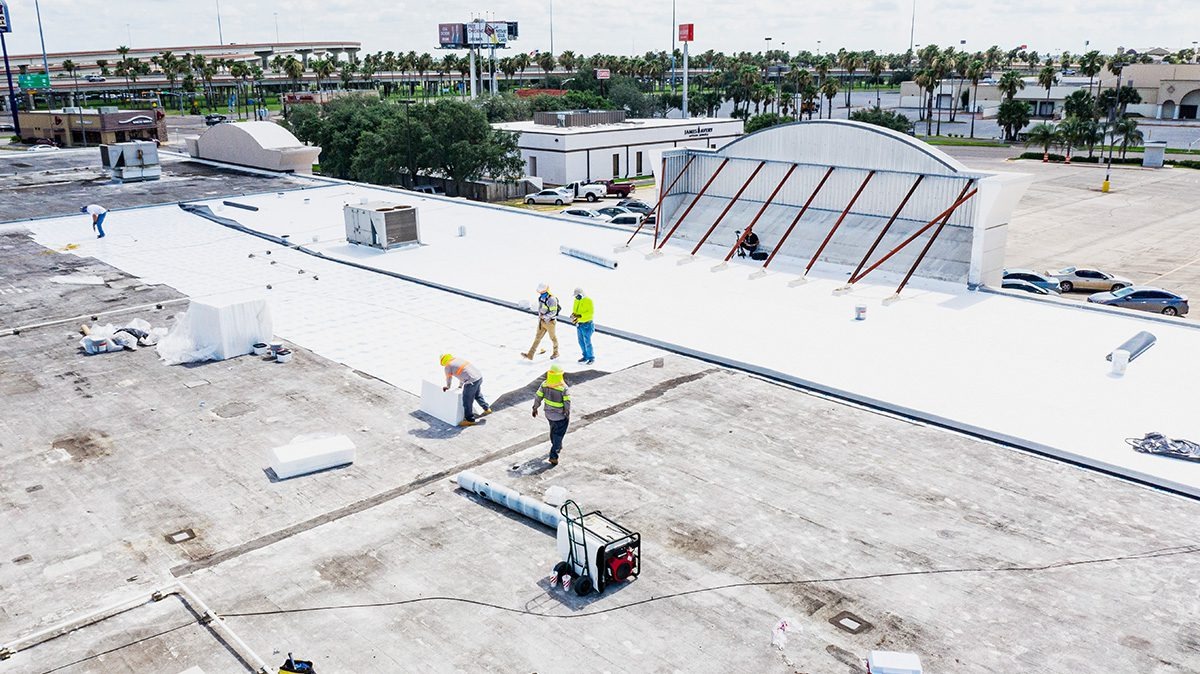
Commercial Roof Insurance Claim Help in Minneapolis, MN
A hailstorm or straight-line wind event doesn't wait for a Minneapolis building owner to be ready. What separates a commercial roof insurance claim that closes at full scope from one that gets underpaid usually isn't the damage itself, it's whether the roof was documented correctly before the adjuster ever walked the deck. Across the North Loop, downtown core, and the Bloomington-Eden Prairie industrial corridor, we work as the roofing contractor on the property, producing the evidence and scope detail that lets you and your insurer settle on an accurate number.
What a Commercial Roof Claim Requires
A commercial property insurer needs more than a description of the leak. They need dated photographs tied to specific roof zones, measured damage areas, the membrane type and age, and a repair scope written to match the building's roof system, TPO, EPDM, PVC, or built-up roofing, all common across Minneapolis's flat-roof commercial stock. We build that record on-site: a zone-by-zone inspection, a damage narrative connecting the observed conditions to a specific weather event, and photo documentation an adjuster can act on without a second site visit.
Timing matters. Minnesota's statute of limitations on property claims is tied to the date of loss, and physical evidence degrades, a hail impression on a TPO membrane in June can be much harder to read after a Minnesota winter has cycled the roof through several freeze-thaw swings. Property managers who schedule a post-storm inspection within a few weeks of an event end up with a cleaner, more defensible claim file than those who wait.
Meeting the Adjuster on the Roof
When the insurer schedules a roof inspection, we're on-site with the adjuster. Our role is to walk the roof alongside them, point to the documented damage zones, and answer technical questions about membrane condition, drainage, and repair method, not to argue the claim on the owner's behalf. Adjusters covering commercial roofs handle a wide range of building types and don't always have deep familiarity with a specific membrane system; having the contractor who inspected the roof present, with the photo log in hand, tends to produce a faster, more accurate joint assessment.
Getting the Full, Accurate Scope Written
The most common gap in a first-pass insurance estimate isn't fraud or bad faith, it's an estimate written before the full damage extent was known, or one that misses code-driven items like updated insulation R-values, edge metal replacement, or tapered drainage corrections that current Minnesota building code requires on a re-roof, even when the original roof didn't have them. We itemize those code and ordinance upgrades separately in the scope so the adjuster can see exactly why they belong in the claim, alongside matching requirements where a partial repair would leave a visibly mismatched roof section.
When a Claim Comes Back Denied or Underpaid
A denial or a low initial settlement is not always the end of the process. We review the adjuster's estimate against our own documented scope, identify what was missed or undervalued, and prepare supplemental documentation, additional photos, measurements, or a clarified damage narrative, that the owner can submit back to the insurer. We're your roofing contractor, not a public adjuster, we document and substantiate the roof damage so you and your adjuster work from an accurate scope. We don't negotiate settlements or represent the property owner in a dispute with the carrier; we make sure the physical evidence supporting the claim is complete.
Most commercial property policies cover roof damage caused by a covered peril, subject to the deductible and policy terms. Whether a specific roof qualifies for full replacement is a determination for your broker or insurer based on accurate roof documentation.
An event occurs, we inspect and document the roof, you report the claim, an adjuster is assigned and inspects the roof with us present, the carrier issues an estimate, and a supplement process resolves any documented gap.
We can re-inspect and provide additional documentation addressing the carrier's stated reason for denial, which you then submit through your normal claim channels.
That depends on the roof's age and the extent of damage relative to total roof area. We give you the measured data zone by zone to support that decision.
No. Filing and managing the claim is between you and your insurer. We provide the inspection, documentation, and repair scope that supports the claim you file.