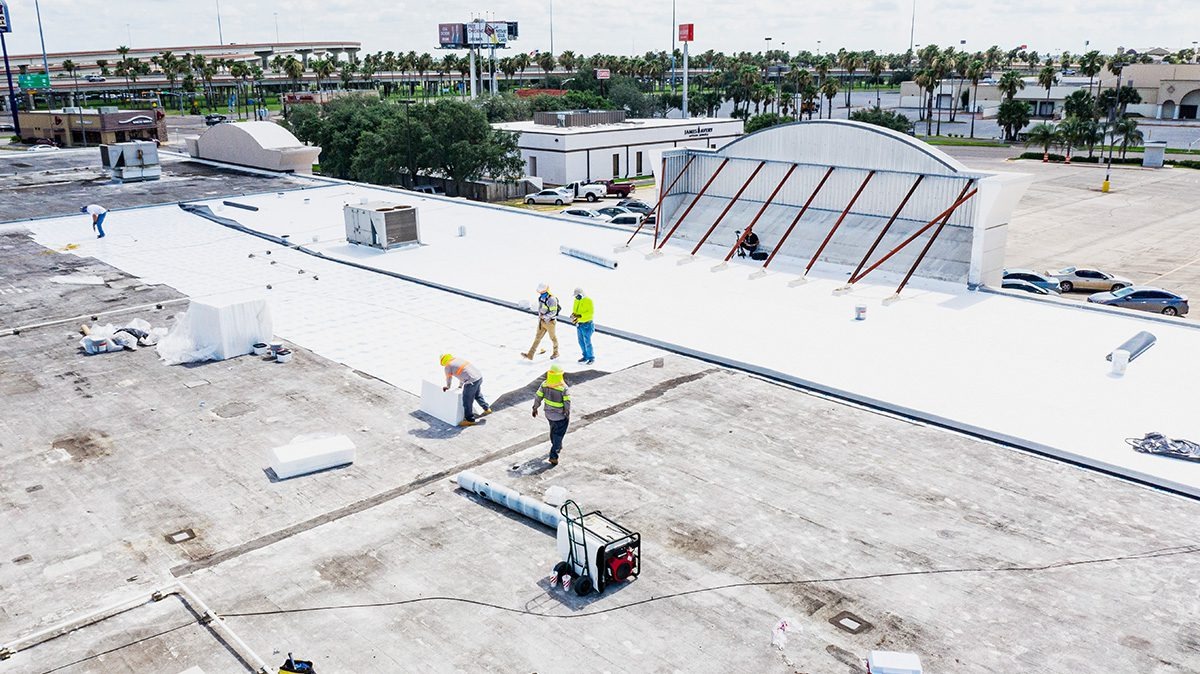
School and K-12 Educational Building Roofing in Minneapolis, MN
Commercial roofing for public and private schools, K-12 campuses, and educational facilities throughout Minneapolis, MN.
Minneapolis Public Schools serves approximately 35,000 students across more than 50 schools in the core of Minnesota's largest metropolitan area, a district whose school building inventory faces the most severe cold-climate roofing challenges of any major U.S. urban district. Minneapolis winters deliver temperatures of minus 20 to minus 30 degrees Fahrenheit, heavy snowfall, and freeze-thaw cycling that destroys ordinary roofing assemblies in a fraction of their design life when not properly specified. Commercial school roofing for MPS requires extreme cold-temperature material performance, snow load structural analysis, and the institutional project management discipline that keeps complex public school work on schedule within Minnesota's narrow construction season.
Snow load is the foundational structural constraint for every Minneapolis Public Schools roofing project. Hennepin County ground snow load requirements under ASCE 7 are among the highest in the contiguous United States, and the wet, heavy snow that characterizes Minneapolis snowfall creates cumulative roof loads that can challenge building structural limits during severe winters. We verify existing structural capacity on every MPS re-roofing project before specifying new insulation layers, ensuring that the total assembly weight remains within safe structural margins under full design snow load conditions including the rain-on-snow surcharge that applies when warm fronts deliver rainfall onto existing snowpack.
Extreme cold temperature performance is a non-negotiable requirement for every component of a Minneapolis school roofing assembly. Membrane products must retain flexibility without cracking at minus 30 degrees. Sealants must maintain adhesion through hundreds of freeze-thaw cycles. Fasteners must be compatible with deck and insulation materials to prevent galvanic corrosion accelerated by de-icing salts used on rooftop walkways and mechanical equipment service areas. We specify only products with manufacturer-published cold-temperature performance data and exclude products whose datasheets lack explicit low-temperature testing results.
Ice dam prevention is a critical design requirement for Minneapolis school buildings. When inadequate insulation allows heat to escape through the roof deck, rooftop snow melts and refreezes at the cold eave, building ice dams that force water back under membrane terminations and into building enclosures. In a school building, the consequences, water-damaged ceiling tiles, compromised lighting, slippery floors, are safety issues in addition to maintenance problems. Our MPS school roofing specification includes continuous ice-and-water shield at all eave zones, enhanced air sealing at all roof perimeter transitions, and tapered polyiso to eliminate flat areas where meltwater pools before reaching drains.
Minnesota public school procurement follows Chapter 123B school district purchasing statutes, which require competitive sealed bids for construction contracts above statutory thresholds and include specific requirements for bid advertising, bond requirements, and contract award procedures. Minneapolis Public Schools also maintains its own procurement policies and contractor qualification requirements. We hold active Minnesota contractor licensing and maintain bonding capacity consistent with MPS project requirements. Certified payroll and labor compliance requirements for federally funded MPS projects are managed through our established payroll documentation system.
Summer scheduling at Minneapolis Public Schools is one of the most compressed construction windows in American public education. Minnesota's construction season for membrane roofing, limited by cold-temperature adhesive and sealant performance to approximately May 15 through October 1, aligns almost exactly with the MPS summer break, leaving very little margin for schedule slippage. We begin material procurement in February for summer MPS projects and maintain a project schedule buffer for weather days that protects August 1 substantial completion targets. A roofing project that misses the summer window in Minneapolis faces a year-long delay to the next construction season.
Thermal bridging at structural steel components that penetrate the insulation layer is a persistent issue in Minneapolis school buildings. Cold structural steel at roof perimeter connections and structural column tops can create condensation and frost on the underside of the deck adjacent to the steel member, causing corrosion and moisture damage that may take years to become visible. We address thermal bridging by specifying continuous insulation without gaps at structural supports and adding thermal break materials at steel perimeter connections, a detail that adds modest cost but prevents chronic moisture damage in Minnesota's cold climate.
Energy efficiency return on investment is compelling in Minneapolis's extreme climate. Minnesota's long heating season, with significant heating loads from October through April, and meaningful loads even in May and September, means that every additional R-value of roof insulation produces savings for seven or more months per year. The difference between a legacy R-15 assembly and a modern R-35 assembly on a large Minneapolis school cafeteria or gymnasium translates to thousands of dollars annually in natural gas savings. Xcel Energy and CenterPoint Energy commercial efficiency programs have historically offered rebates for qualifying insulation upgrades, and we help MPS facilities staff pursue available incentives as part of pre-construction planning.
Emergency roofing response for Minneapolis Public Schools is a year-round commitment that includes the district's most demanding months, January and February, when roofing emergencies are both most likely and most challenging to address. Winter emergency repairs at MPS campuses require heated tenting, cold-weather-appropriate temporary repair materials, and crews trained and equipped for safe operations in extreme cold. We maintain this capability year-round and provide same-business-day emergency response to school buildings in our maintenance program regardless of outside temperature.
How do I know if my Minneapolis BUR roof needs repair or full replacement?
The decision turns on moisture saturation in the insulation layer. If core sampling shows wet insulation in more than 25% of the roof area, replacement is typically more cost-effective than recover, saturated insulation has to be removed regardless, and at that percentage the removal and disposal cost closes the gap between recover and replacement. If wet areas are under 25%, we cut out the wet insulation, replace it, and recover the system. We document every core pull and give you the data to make the decision, we do not make a replace recommendation on surface condition alone.
Can you work on BUR roofs in Minneapolis winters?
Repair and maintenance work on BUR systems can be done in winter with appropriate materials, modified bitumen torch patches, cold-applied sheet materials rated for cold-temperature application, and peel-and-stick flashing products that maintain bond at low temperatures. Hot-mop BUR installation (new multi-ply systems installed with a kettle and hot bitumen) requires substrate temperatures above the minimum specified by the bitumen manufacturer, typically 40°F for the substrate, not ambient, which limits full-system installation to the warmer months. Emergency dry-in work in winter uses temporary materials that are replaced when conditions allow.
Does working on an existing BUR system require special disposal procedures?
Older BUR systems, particularly those installed before 1975, may contain asbestos-containing materials in the ply felts or the bitumen compound. We require an asbestos survey prior to any core sampling or tear-off on BUR systems that predate 1975. The survey is the building owner's responsibility, but we can coordinate with qualified industrial hygienists in the Minneapolis market. Asbestos-containing BUR systems require abatement by a licensed asbestos contractor before roofing work proceeds, this adds time and cost to the project scope and needs to be in the project plan before contract signing.